Disclaimer: I wrote this. Not AI.
The retreat
Few weeks ago, I was in Kenya to attend the African Bitcoin Payments Retreat which was a gathering of African builders currently creating Bitcoin-focused solutions in the continent.
But more broadly, the goal of the retreat was to “bring together builders and partners working across Africa to advance Bitcoin payments on the continent”. Over two days, participants engaged in conversations focused on the real-world experience of growing Bitcoin payment solutions in our respective countries and how we can collectively accelerate that growth.
Discussions was on shared challenges and practical strategies, including:
Funding and sustainability for Bitcoin payment projects;
Navigating regulatory environments across Africa;
The Last Mile Problem: distribution, trust and user behavior across Africa;
Technical interoperability and cross-border Bitcoin payment flows;
Partnerships and knowledge sharing for continent-wide scaling.


The retreat was funded by the HRF, and coordinated by Minmo team.
I want to thank them all for inviting me and for offering me a unique opportunity to meet like-minded people and collaborate with them to build a decentralized payment infrastructure that leverages the Bitcoin protocol and mobile money APIs. I will write about this experience with more details in another article.
Now, this is where the ‘accidentally’ starts.
The conference
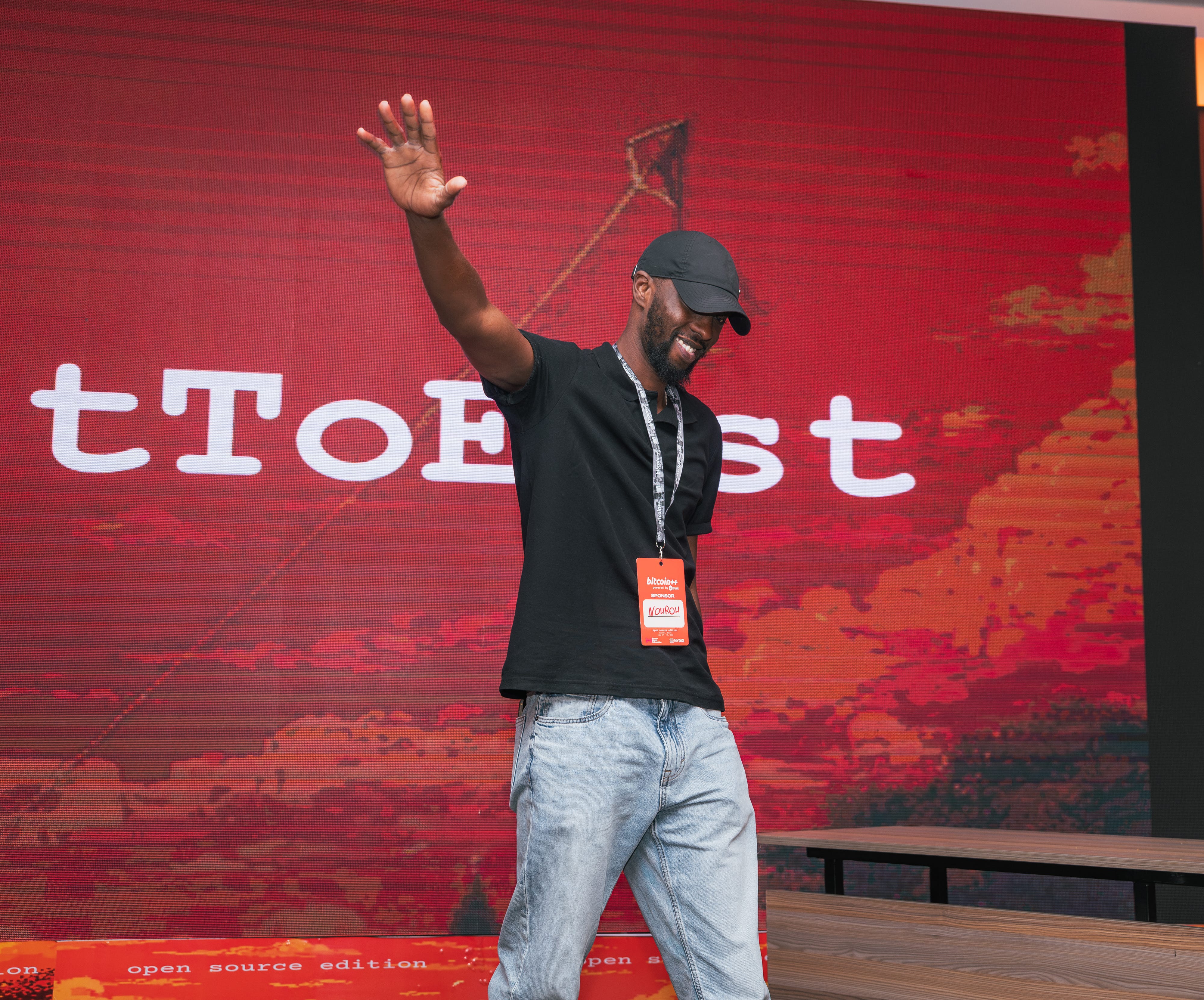
I was proposed by Minmo team to attend the BTC++ Open source edition that was taking place in Nairobi, Kenya, right after the retreat.
For those who didn’t know, “Bitcoin++ works in public is a four-day Bitcoin developer event that brought together builders from Africa and around the world to highlight working in public and contributing to Bitcoin’s global protocols. Organized in partnership with local teams, the event celebrated open-source development, collaboration, and the growing impact of African developers on the Bitcoin ecosystem.”
As a curious person who is always willing to learn and meet other builders, I was excited to attend and said yes.
On the first day, I learned about a hackathon that would last 24h, with the following judging criteria:
To judge hackathon projects, we follow the global standard for performance-based judging: the Olympics Women’s Gymnastics Rubric. Judges will be evaluating each hackathon team’s performance based on the following criteria:
- Routine Difficulty: Project idea, Potential impact of project, ambition
- Routine Execution: Project achievement, What you actually built, Does it work
- General Effect: Swag Factor, Presentation, Applicability to theme
I was hyped. Coming from the retreat and talking with all those builders from across the continent, I had an idea.
The hackathon
Weeks ago, Tando team shared to the world an exciting news: from now on, you can use any lightning-compatible wallet and send directly Kenyan Shillings to the 40M MPesa users in Kenya. How? By just using their phone numbers as the first part of now a dedicated lightning address. No more need of a gated API.


For the past year, I was working on and deployed Banxaas, a bridge that connects Mobile Money solutions to Bitcoin, in 4 countries: Senegal, Ivory Coast, Cameroon and Guinea. The solution is already capable of doing:
Mobile money checkouts and payouts
Lightning invoices and payouts
This creates a matrix of Bitcoin on-ramping/off-ramping, but also cross border payments and interoperability between 4 countries, 3 currencies (XOF, XAF, GNF), 11 mobile money operators (Wave, Orange Money, MTN, Moov, Mixx…).
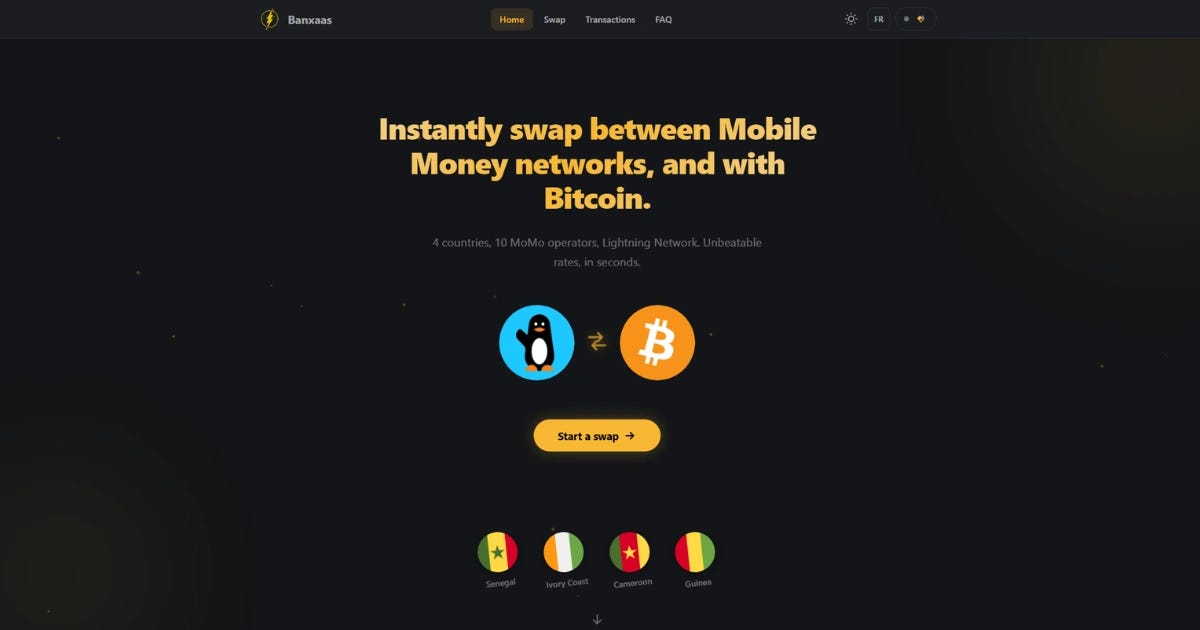
The idea of the hackathon was set: I will leverage the new Tando feature and add a bridge between these Mobile money and currencies located in West Africa, to MPesa in Kenya, East Africa. I called the feature ‘WestToEast’.
I started working on it right away and stumbled on few challenges:
Understanding of the LNURL spec
Understanding of Tando’s new feature and process
XOF > Sats > KES conversion rates
Update of Banxaas architecture
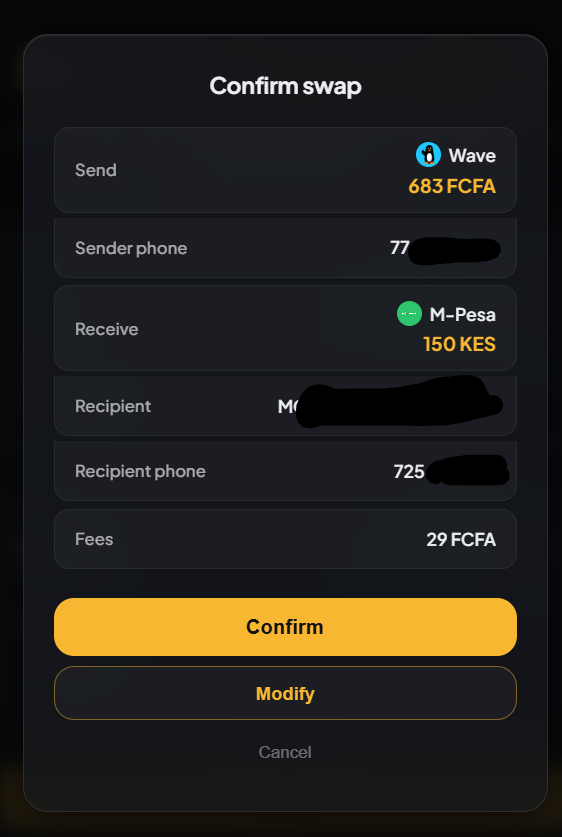
Then, I designed a process that would allow the user to seamlessly swap to MPesa, without even knowing that Bitcoin is the rail behind the whole process.
Case study: Alice lives in Senegal and want to send money to Bob who lives in Kenya (XOF > KES):
Alice navigates to Banxaas and requests to send 150 KES
Banxaas will ask for a Kenyan phone number
Banxaas queries Tando to get BTC/KES quote, through LNURL specs
Then, Banxaas compute XOF/KES and shows the XOF amount required for the swap to Alice
Alice pays the XOF amount through her Senegalese mobile money wallet (ex: Wave)
After confirmation of the checkout, Banxaas send SATs to Tando through the lightning network
Tando convert those SATs to KES
Bob receives KES to his Mpesa wallet, through his phone number, from Tando
Then Tando sends a receipt to Banxaas to close the whole process
The whole process takes less than 1 minute and costs Alice less than 3% fees (compared to 30% fees on average in traditional remittance solutions).
Presentation
24h after the beginning of the hackathon, it was time to make a 3mn presentation to some judges. With this small amount of time, I had to be practical. First, I highlighted some stats on Africa that I already presented during the last ABC in Mauritius:
Countries: 54
Currencies: 42
Mobile Money users : ~600–800 million
Mobile money services: ~187
Now, by adding this new ‘WestToEast’ feature, I am connecting 46M mobile money users in those 4 countries that are already in Banxaas (with around 80M accounts) to a country with around 40M MPesa users. The value and impact are here, creating a now 86M people market, connected to Bitcoin, just by adding a feature. Unbelievable.


I was then selected among the 6 teams, out of 37, that would talk about their project on the Main stage. It was stressful. I am a shy guy. I had to do pullups to reduce the stress level and build the courage to show what I built.
Here also, I made the bold decision to talk less and to just do a live transaction. I had a volunteer, residing in Kenya. So, I just used the ‘WestToEast’ feature to send her KES200 in her MPesa wallet, while paying 925FCFA via my Wave wallet. The energy was high in the room.
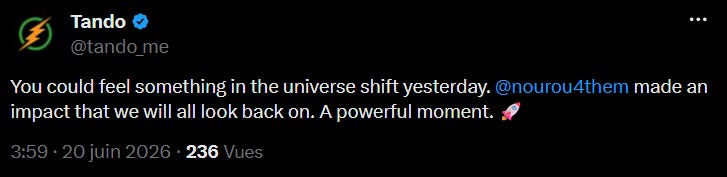
Like I said on stage, we just witnessed how we can solve cross borders payment issues in Africa, by using a P2P electronic cash system (Bitcoin).
Victory
After a long deliberation and a really stressful (for me) winners announcement, the ‘WestToEast’ feature was declared overall winner of the hackathon. I came in this conference without expectation, I left with a price. More than the trophy and the money, I won the experience of building something that I know, if handled carefully, will change millions of people’s lives.


This victory is also everyone’s victory: HRF, Minmo, builders that attended the retreat, Tando, Btrust, BTC++ team, the broader african bitcoin ecosystem, but also the other participants who did a great job. I thank you all.
What’s next?
As of today, the ‘WestToEast’ feature is already live on Banxaas, seeing its first users. Through the same process, I also added Tanzania to the country list, with MPesa TZ (through Chapsmart). I am also working with Bitzed team to add Zambia (MTN and Airtel) to the list.
Step by step, we are building a decentralized network of correspondent mobile money operators, using Bitcoin and the lightning network.
Let’s go.